Treatments
Dental implants in Dangjin: steps, timeline and cost questions
When an implant makes sense
If a tooth is lost or cannot be saved, the gap can let neighbouring teeth tilt and the opposite tooth drift. An implant fills the gap without grinding down the healthy teeth on either side, which a bridge would need.
The steps
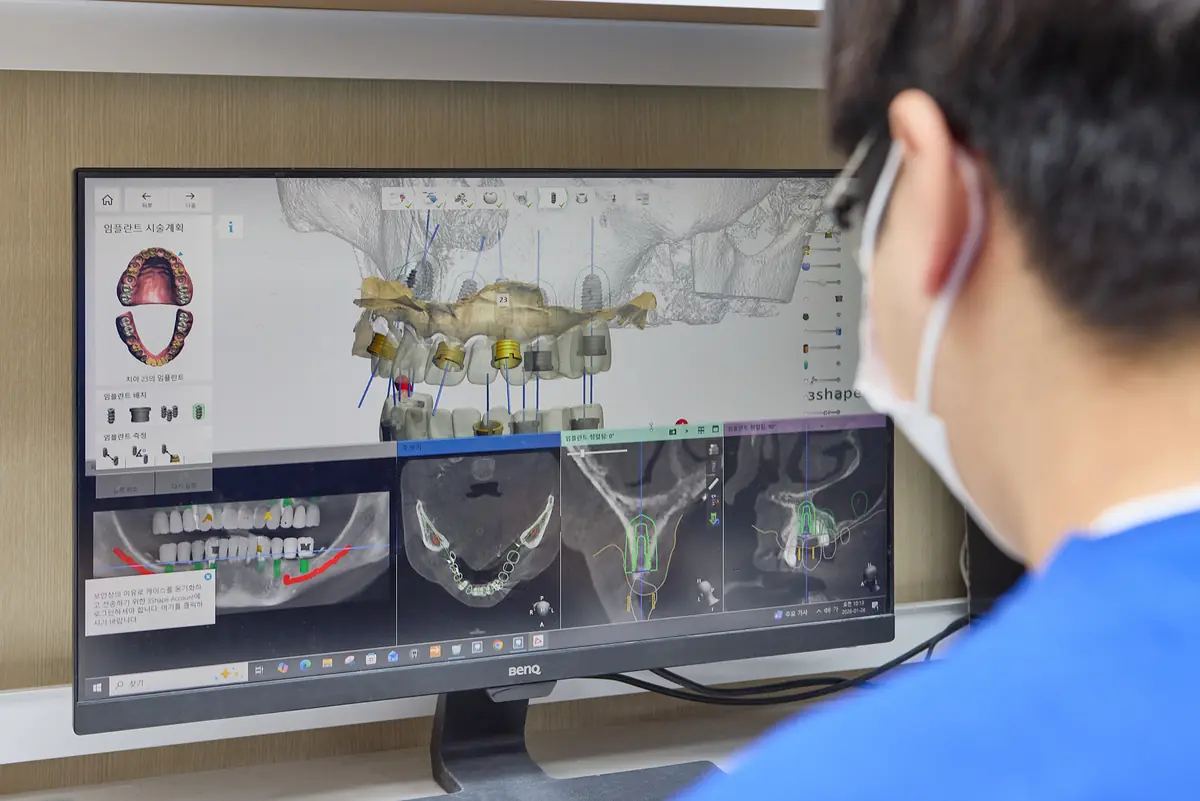
- Consultation and 3D scan. A CT scan shows bone height and nerve position, so the implant can be planned on screen before surgery.
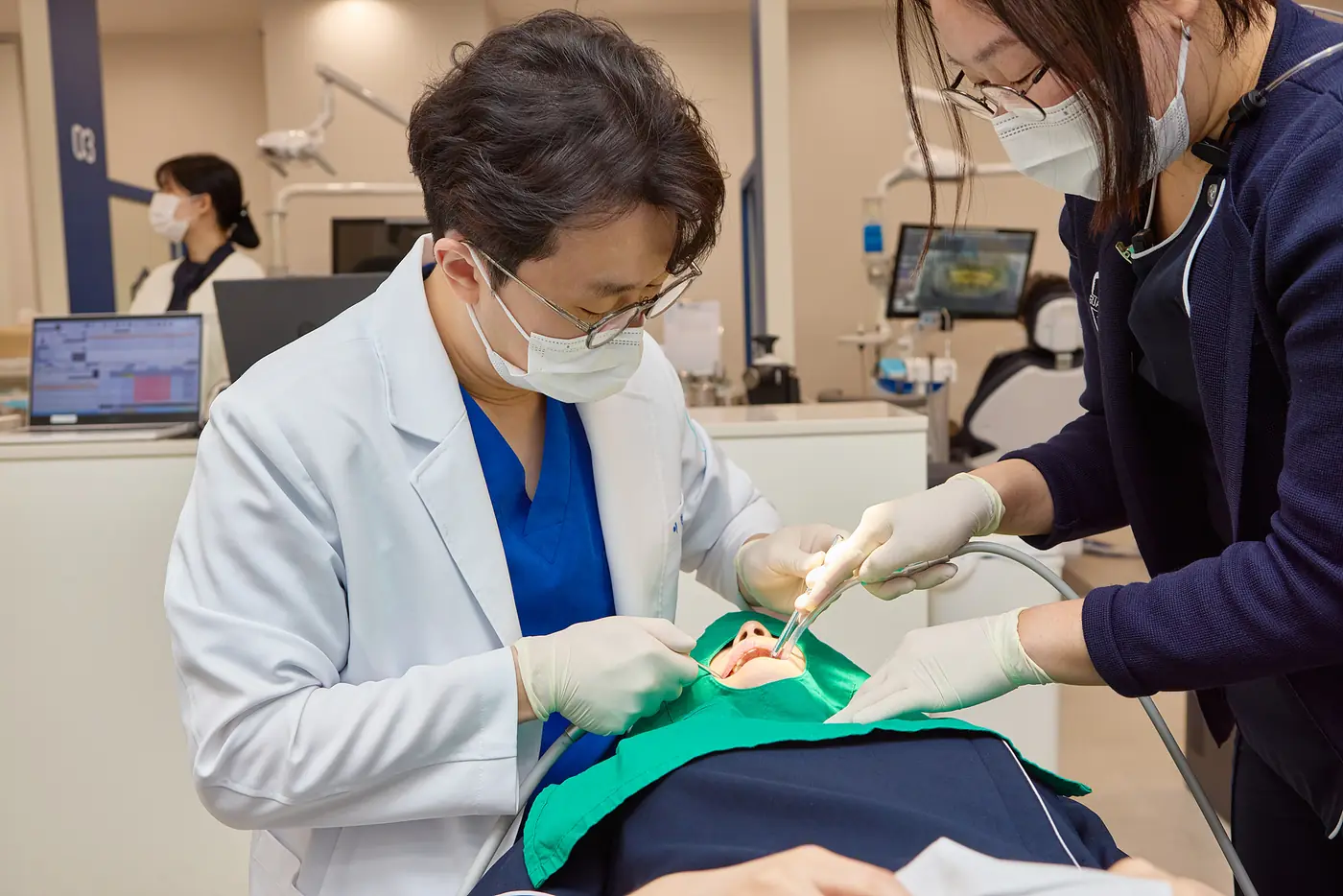
- Placement. The implant is placed under local anaesthetic. Most people go back to normal activity the next day.
- Healing. The bone bonds to the implant over about 3 to 4 months. You may wear a temporary tooth.
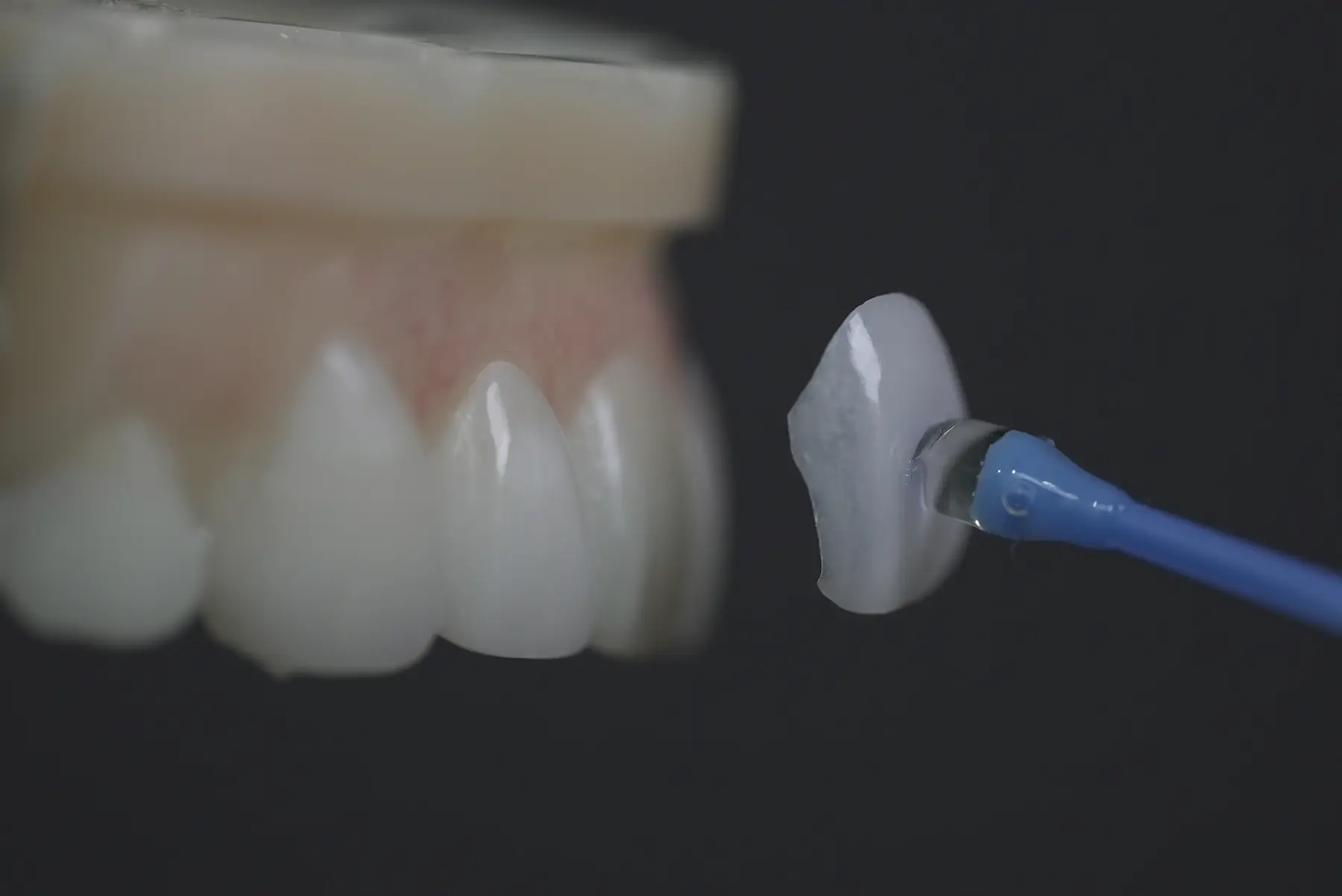
- Final crown. We take an impression or scan and fit the crown.
Insurance and price
Korean National Health Insurance covers implants for people aged 65 and over, up to two in a lifetime, with a co-pay. For everyone else implants are not covered. We give you the full price, in writing, before any treatment, and registered foreign residents get our resident benefit on non-covered treatment.
Planning around your stay
Because healing takes months, tell us if you may leave Korea. We can schedule placement so the crown is fitted before you go, or plan the timing with you if you will travel home during healing.
Looking after an implant
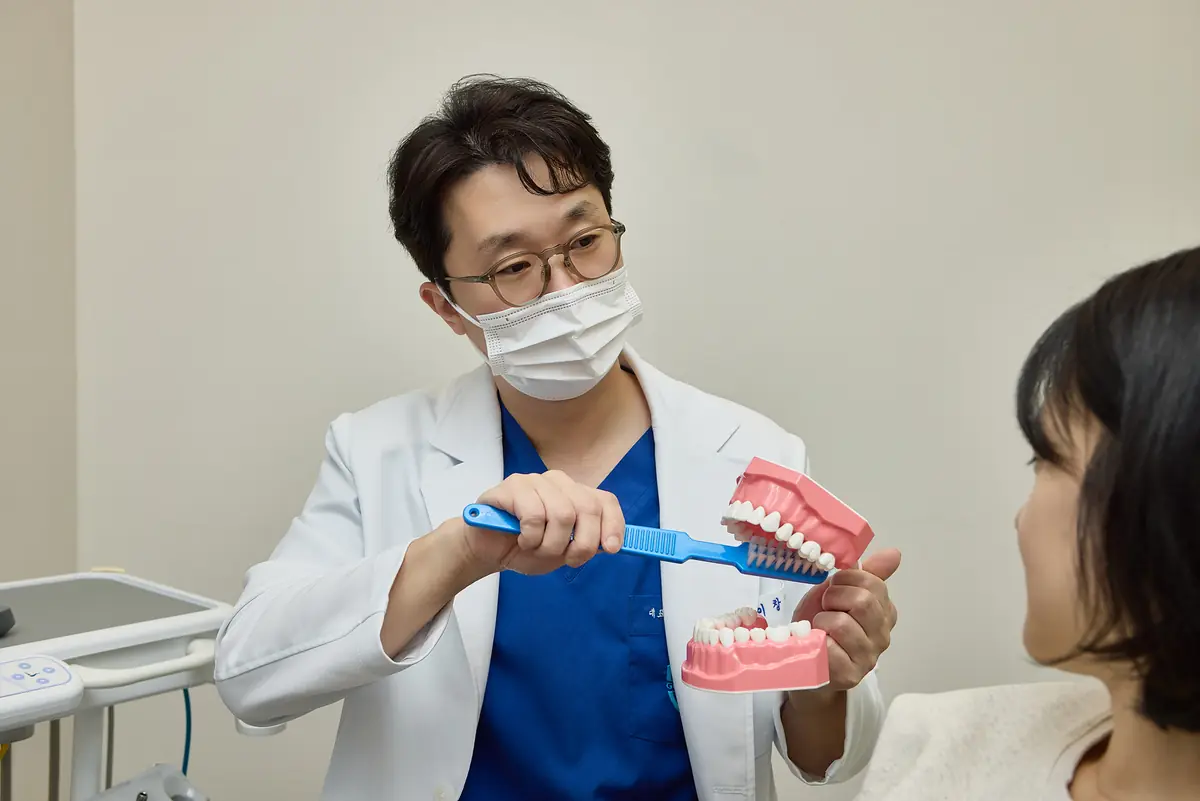
Implants do not decay, but the gum around them can get infected. Brush carefully, use interdental brushes, and come for check-ups and scaling.
Questions
Does implant surgery hurt?
The area is numbed, so you feel pressure rather than pain. Some swelling for a few days is normal, and we give you aftercare instructions in writing.
Can I get an implant if I smoke?
Yes, but smoking raises the risk of the implant failing. Stopping before and after surgery helps healing.
General information, not a diagnosis. Your dentist will advise you after an examination.